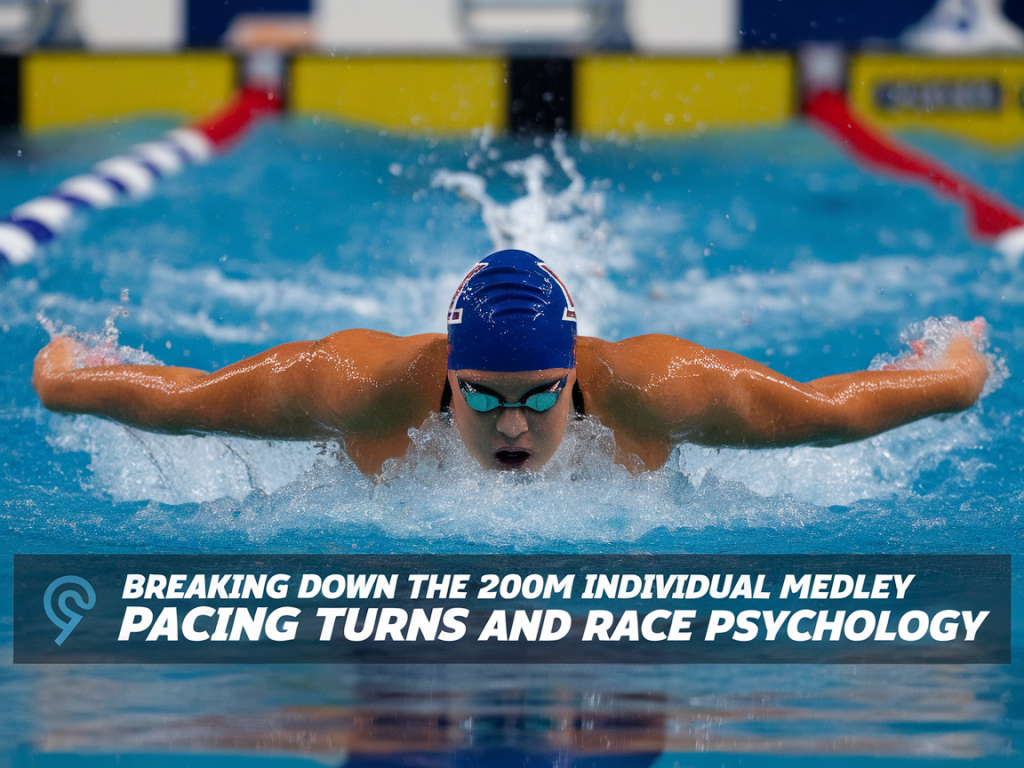
I still remember my first 200 IM race as a junior — that nervous mix of excitement and dread as I stood behind the blocks, knowing I had to swim four different strokes well enough to hang on. Over the years I’ve coached dozens of swimmers through this event, from kids trying their first IM to masters athletes chasing a PB. The 200m IM is a beautiful test of technique, pacing, turns, and mental strength: it exposes your weaknesses quickly but also rewards smart racing and solid fundamentals. Here are the lessons I teach most often, the drills I use on deck, and the race strategies that consistently help swimmers perform better.
Why the 200 IM is uniquely challenging
The 200 IM is not simply four 50s back-to-back. It demands transitions — both physical and mental — between strokes, a clear plan for energy distribution, and excellent underwater/turning skills. Many swimmers are comfortable in one or two strokes but get exposed when asked to maintain race pace across all four. In my coaching, I frame the 200 IM as a balance between technical consistency and controlled intensity: go fast enough to be competitive, but not so fast that you pay for it on the breaststroke or free leg.
Pacing: how to distribute effort across four strokes
Pacing is the single most common question I get: “How hard should I go on fly?” or “When do I kick for free?” My general guidance is to think of the race in three parts rather than four:
More specifically:
Use your training times to build a target pace chart: take your best 50s in each stroke (?) and subtract appropriate seconds to simulate fatigue. During meets, I ask swimmers to break the 200 IM into 4x50 target splits on their pace clock, and tape those to their goggles if needed.
Turns and underwater work: where races are won or lost
Turns matter more in the 200 IM than in a single-stroke 200 because you get three different kinds of turns plus unique start and fly-to-back transition. I teach turns as “mini-races”: attack the wall, get a fast but legal transition, and maximize your underwater phase.
Underwaters (dolphin kicks and pullouts) win races. I regularly run sets like 8 x 25 @ race pace focusing only on the 15m underwater. Swimmers who can extend their legal underwater to the full 15m on each wall gain seconds — often the difference between making a final and missing it.
Common technical mistakes and quick fixes
Race psychology: staying calm and focused
Mental approach transforms physical ability into performance. I coach swimmers to use a two-stage race plan: an outward plan (pacing, splits, technical cues) and an internal anchor (a short phrase or image to return to when race stress peaks). My athletes often use anchors like “strong through the walls” or “long strokes home”. Practice them in training so they become automatic at meets.
Training drills and a sample race-specific set
Here’s a practical pool set I use the week before a meet to sharpen IM skills. It focuses on pace, turns, and underwaters without over-taxing the athlete.
| Set | Details |
|---|---|
| Warm-up | 400 mixed swim, 4 x 50 build (fly/back/breast/free) |
| Turns & underwaters | 8 x 25: make each wall 15m underwater, full breakout, easy swim back |
| IM pace practice | 6 x 200 IM @ race target with 4 min rest — focus on exact splits and transitions at race pace |
| Race simulation | 2 x 200 IM hard but controlled, feedback on splits, video analysis if possible |
| Cool down | 300 easy |
Gear and monitoring
Technology helps. I like using a simple pace clock and a stopwatch for splits, and when available, a small waterproof action camera for a turn-focused video review. Brands like FINIS and Speedo make good training tools (paddles, snorkels, and fins) that help isolate stroke mechanics. For masters swimmers, a tempo trainer can be a good drill tool to establish consistent cadence, especially on fly and free.
If you’re preparing for a major meet, tape your target splits to your cap or goggles and rehearse them in training. The more your body knows the rhythm, the less your mind will panic on race day.
If you’d like, send me a recent race video or your splits and I’ll give specific feedback on pacing and turns. I love breaking down races with swimmers — it’s one of the most satisfying parts of coaching and of running this blog.