Recovering from shoulder pain can feel like being benched from the thing you love most. I’ve coached swimmers through tendonitis, impingement, and post-surgical rehab, and one lesson keeps coming back: you don’t have to stop training — you just need to be smarter about how you train. This article shares practical cross‑training sessions and progressions that protect the shoulder while maintaining cardio fitness, leg strength, and swim‑specific movement patterns.
What I mean by cross‑training for shoulder recovery
When I talk about cross‑training in this context, I mean structured sessions that: reduce load on the injured shoulder, preserve aerobic conditioning, maintain leg and core strength, and gradually restore shoulder capacity with targeted, low‑risk exercises. The aim is to come back to full swimming without losing fitness or creating compensatory movement patterns that cause new problems.
Key principles I follow
- Work with a clinician: Before starting any program, check with a physiotherapist or sports doctor. Get a diagnosis and clear movement restrictions.
- Prioritise pain-free movement: Use the "acceptable pain" rule — slight discomfort (<2/10) that settles quickly is often okay, but sharp or worsening pain is not.
- Focus on scapular control: The shoulder blade drives healthy shoulder mechanics. Many swimmers benefit most from scapular stabilization before heavy rotator cuff work.
- Progress gradually: Start with isometrics and low‑load endurance, then add resisted concentric work and finally dynamic swimming loads.
- Maintain aerobic fitness: Replace high‑impact or overhead activities with low‑impact cardio (cycling, rowing with appropriate technique, aqua jogging).
Pain‑safe strength and mobility toolbox
These are the exercises I use most often. All should be performed with attention to pain and quality of movement.
- Scapular squeezes — seated or standing, pull shoulder blades together and slightly down. 3 sets of 15 slow reps.
- Wall slides — standing facing a wall, slide forearms up and down focusing on upward rotation of the scapula. 3 sets of 10–12.
- Prone T/Y/I on bench — light emphasis on scapular retraction and depression. 3 sets of 10 each position.
- Resisted external rotation with Theraband — elbow tucked, rotate outward. Start with yellow or red Theraband. 3 sets of 12–15.
- Isometric holds — press hand into wall across different angles (internal, external, flexion) and hold 10–20s. 4 holds each.
- TRX rows and single‑arm rows — body rows that emphasize scapular control before heavy pulling. 3 sets of 8–12.
- Farmer carries and suitcase carries — develop vertical load tolerance with neutral shoulders. 3 x 40–60s walks.
- Thoracic mobility drills — foam roller extensions, open‑book rotations to improve upper back extension and rotation.
Cardio and conditioning options that spare the shoulder
Maintaining cardiovascular fitness is crucial. I pick modalities that avoid repetitive overhead motion and sudden loading of the shoulder.
- Cycling — outdoor or stationary, keep a neutral upper body and core engaged. Zwift or a local club ride are great for structure.
- Concept2 rowing — rowers are excellent but you must adjust technique: shorter arm pull, emphasize legs and core, avoid aggressive overreach with the arms while recovering.
- Elliptical or ski‑erg (Concept2 SkiErg) — low impact, controlled range; SkiErg may be uncomfortable for some shoulder injuries, so test cautiously.
- Aqua jogging and deep water running — unique to swimmers, it keeps hip drive and leg turnover without shoulder involvement.
- High‑intensity interval training (HIIT) with lower‑body bias — sled pushes, bike intervals, kettlebell swings (light, hip‑driven) for metabolic demand.
Pool‑based, shoulder‑friendly sessions
Being in the water can still be productive. Here are sessions I like to prescribe when a swim stroke is off‑limits.
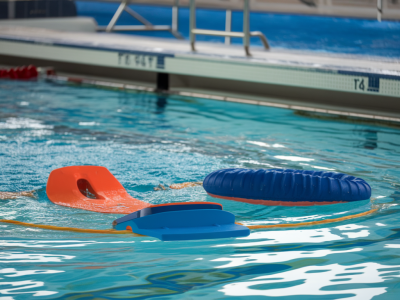
- Kicking sets: Use a board or without depending on comfort. Focus on ankle flexibility and core stability. 8 x 50 kick @ moderate with 15–20s rest.
- Pull with pull buoy only if cleared: Many shoulder injuries are aggravated by pulling; only do this when your clinician clears you and use light bands to reduce load.
- Single‑leg flutter with snorkel: Keep head neutral with a snorkel and isolate leg drive. 6 x 25 each leg.
- Sculling and gentle catches — when pain allows, small‑range sculling to reintroduce water feel with controlled range of motion.
- Deep water vertical kicking (aqua jogging) — 3–5 x 3 minutes with 1 minute rest to build cardiovascular base.
Sample 4‑week progression (3 workout days + 2 cardio days)
| Day | Session | Focus |
|---|---|---|
| Day 1 | Pool: 10min warm‑up snorkel + 6 x 50 kick + 8 x 25 scull/gentle drills | Leg drive, water feel |
| Day 2 | Gym: Scapular work + Theraband ER/IR (3x12) + TRX rows (3x8) + farmer carries | Scapular control, rotator cuff endurance |
| Day 3 | Cardio: 30–45min cycling (zones 2–3) or Concept2 steady state | Aerobic maintenance |
| Day 4 | Pool: Aqua jogging sets 5 x 3min + mobility | Cardio without shoulder load |
| Day 5 | Strength: Legs + core (squats, step‑ups, RDLs), thoracic mobility, isometrics | Lower body power and posture |
Each week, increase either volume or intensity by ~10% depending on pain response. After 3–4 weeks of pain‑free work, add gentle swim sets focusing on short intervals and technique (e.g., 10–15m builds, emphasis on catch timing) before returning to full training.
Common questions swimmers ask me
- Can I swim butterfly or freestyle with shoulder pain? Usually not early on. Butterfly places high load on eccentrics. Freestyle might be possible if range of motion is limited and pain controlled, but technique changes can create other issues — check with your physio.
- How quickly will I regain my strength? Rotator cuff endurance tends to recover in 4–8 weeks with consistent work; full return to race pace may take longer depending on severity.
- Which equipment should I use? Therabands, a light dumbbell set (1–5kg), TRX strap, foam roller, and a Concept2 rower if available — they’re versatile and swimmer‑friendly.
- When do I see a physiotherapist? If pain persists >2 weeks despite rest/modification, or if you have night pain, weakness, or numbness — get professional assessment.
Practical tips I give my swimmers
- Keep a daily pain and workload diary — small trends over days tell more than single workouts.
- Warm up thoroughly with thoracic mobility and scapular activation before any session.
- Don’t chase lost yardage immediately — quality two‑week return blocks beat reckless ramp ups.
- Use swimming as a rehab tool, not a punishment — short, focused technical reps speed recovery more than long, sloppy miles.
If you want, I can design a personalised 6‑week cross‑training plan based on your diagnosis and equipment access (pool only, gym available, or home‑based). Tell me about your injury, current pain level, and goals, and I’ll map out progressive sessions that keep you moving forward without risking a setback.