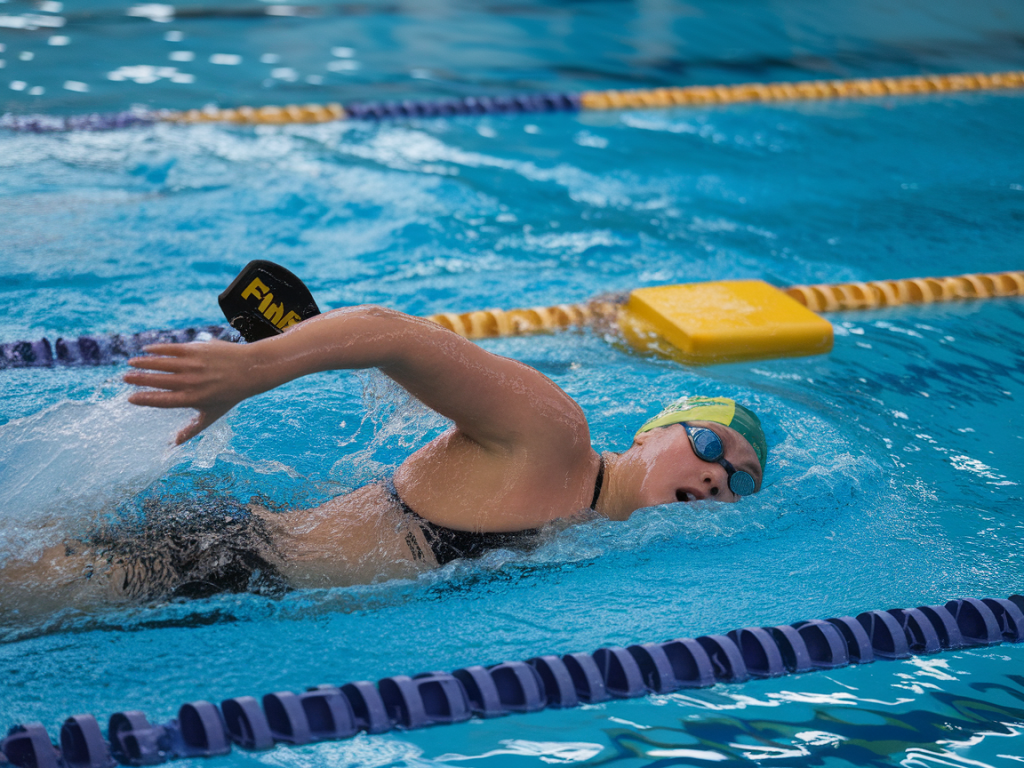
I started using the FINIS Tempo Trainer with my masters groups after noticing a recurring pattern: strong swimmers who could hold pace on dryland or in short sets would come unstuck when asked to hold a consistent cadence over longer reps. Inconsistent freestyle cadence shows up as uneven stroke timing, drifting splits, and a lot of frustration. Over several months I developed a simple, repeatable approach that helps masters swimmers find and keep an efficient rhythm — and I want to share it with you.
Why cadence matters for masters swimmers
Cadence (or stroke rate) is the heartbeat of your freestyle. It determines how often your hands enter the water and directly affects speed, efficiency, and endurance. Masters swimmers often have the physical capacity to swim fast in bursts but struggle to maintain an optimal cadence as fatigue, breathing patterns, or technique lapses creep in. That leads to either overstroking (too slow a cadence with long, inefficient glides) or 'spinning the wheels' (too fast, short strokes with low propulsion).
The FINIS Tempo Trainer is a small, waterproof metronome that beeps at a set beats-per-minute (BPM). When used properly, it becomes an objective way to teach and reinforce a target cadence, remove guesswork, and provide immediate auditory feedback — something especially useful for swimmers who are used to feel more than data.
Common questions I get
Before we dive into how I program sessions, here are the questions I hear most from masters swimmers and coaches:
I’ll answer these through practical steps and sample sessions below.
Choosing a target cadence
There’s no single “right” BPM for everyone — it depends on stroke length, fitness, and goals. My rule of thumb when working with masters is to first identify a swimmer’s comfortable race cadence (from a 50 or 100 test), then trial a cadence 4–8 BPM lower and 4–8 BPM higher to find the sweet spot where pace is efficient and sustainable.
Why this range? Dropping cadence slightly can encourage longer, more effective strokes for distance swimmers. Increasing cadence slightly can help sprinters reduce drag by shortening the stroke and adding turnover. The Tempo Trainer helps you experiment safely.
How I introduce the Tempo Trainer to a masters group
I introduce the device in three phases: familiarisation, targeted training, and transfer to free swimming.
Drills and sets I use
Below is a small table of drills, what they teach, and how to use the Tempo Trainer with them.
| Drill | Purpose | Tempo Trainer use |
|---|---|---|
| Catch-up | Encourages full extension and timing between hands | Set a slower BPM to encourage long strokes; aim for one beep per stroke |
| Single arm freestyle | Isolates pull timing and breathing side | Use the beat to cue the catch and finish on the same side each stroke |
| 3-3-3 (3 kicks/3 pulls/3 full) | Works balance and rhythm changes | Change BPM between phases to highlight rhythm contrast |
| Fingertip-drag | Promotes high elbow recovery and consistent entry | Match recovery cadence to the beep to keep entries uniform |
Sample 1-hour masters session with Tempo Trainer
I share this session for adaptation — adjust distances/rest for your group.
Tracking progress
I ask swimmers to record three things after tempo-focused sessions:
Over weeks you should see stroke counts stabilise, perceived effort for a given pace decrease, and more consistent splits. The Tempo Trainer gives you an objective anchor so improvements are easier to identify.
Troubleshooting common problems
Here are issues I’ve helped swimmers overcome and how:
How quickly will masters swimmers adapt?
Adaptation depends on practice frequency and variability. With once-a-week tempo-focused sessions, I usually see meaningful improvements within 4–6 weeks. With twice-weekly work, changes appear faster. The Tempo Trainer accelerates learning because it removes ambiguity — swimmers hear every missed beat and can correct in real time.
If you want, I can share a 6-week progression plan for a masters cohort, including downloadable BPM charts and a simple log you can hand out to your swimmers. Just tell me the typical fitness and meet goals of your group, and I’ll tailor it.
