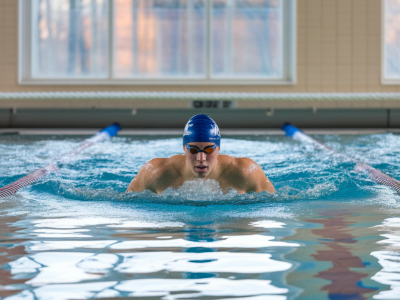
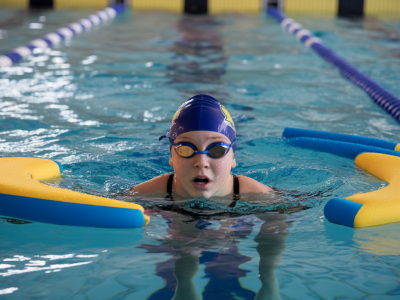
I’m often asked how to taper for a local meet without arriving rusty or flat. Two weeks is a common length for club swimmers and masters who can’t afford long tapers — and when done right, it’s perfectly possible to be both rested and sharp. Below I share my practical, experience-based two-week taper plan, variations for sprinters and distance swimmers, and the non-pool details that make the difference: warm-ups, dryland, sleep, nutrition, and race-day sharpness.
Principles I follow for a two-week taper
Before diving into sessions, you should understand the principles I follow. These guide every decision:
Reduce volume, keep intensity. You want to preserve race speed and neuromuscular power while letting fatigue dissipate.Progressive recovery. The first week drops volume substantially; the second week focuses on freshness and race rehearsals.Quality over quantity. Maintain short, high-quality sets that simulate race pace and starts/turns.Individualise. Age, experience, training history and event distance change how you taper.Non-physical factors matter. Sleep, hydration, food and routines make the taper work.General two-week structure
Here’s the structure I use with club squads. Percentages refer to training volume relative to a typical heavy training week (100%). Adjust up or down depending on the swimmer.
| Week | Volume (% of heavy week) | Focus |
| Week -2 (14–8 days out) | 60–75% | Begin recovery; maintain some threshold, include race-pace pieces |
| Week -1 (7–1 days out) | 30–50% | Freshness, race rehearsals, speed, short race-pace reps, tapering dryland |
Sample daily microcycle
This is a flexible weekly example. I coach swimmers to communicate — if they feel overly tired, reduce another 10–15% of volume or swap an interval for easy technique work.
Monday (13–14 days out): Moderate volume. Mixed aerobic + race-pace efforts. Example: 3,000–4,000m for club athletes; include 6–8 x 100 at race-pace with full recovery.Tuesday: Technique & starts. Short sets, flyover turns, 10–12 sprint efforts off blocks (15–30m) with long rest. Total volume ~50–60% of normal.Wednesday: Easy recovery swim (active recovery), drills and mobility, 2–3 km. No heavy sets.Thursday: Race-pace day. Simulate events: 2–4 race-pace repeats (50–200m depending on event) with race-level rest. Keep session short.Friday: Light technique + short sprint sets. Reduced dryland — mobility only.Saturday: Practice race warm-up and one or two full-pace race simulations. Keep it specific and short.Sunday: Off or very light swim, stretching and sleep catch-up.Two-week example plan (sprinter vs mid-distance vs distance)
Below I give practical examples for the two main types of swimmers in local meets. Swap meters for yards if needed.
Sprinter (50–100m events)
Week -2: 3 sessions. Key set: 8–12 x 50 @ 95–100% with 2–3 min rest. Short flyovers and dive practice. Total meters ~3,000–3,500.Week -1: 2–3 sessions. Key set: 6 x 25 all-out from block with >3 min rest, 4 x 50 at race-pace. Total meters ~1,000–1,800. Two days off or very light the two days before the race.Mid-distance (200–400m)
Week -2: 3–4 sessions. Include 4–6 x 200 @ 90–95% with 3–5 min rest or broken 200s (e.g., 50s fast + 25 easy). Total ~3,500–5,000m.Week -1: 2–3 sessions. Key: 3 x 200 race-pace rehearsal with race-like turn practice but shorter overall volume. Finish with short speed reps (4 x 50). Total ~1,800–3,000m.Distance (800m+ open water or pool)
Week -2: Keep some aerobic load but cut volume by ~25–40%. Long set example: 1 x 1,500 at moderate pace plus 6 x 200 at threshold. Total ~5,000m.Week -1: Sharply reduce distance. 2 sessions with 1,000–2,000m focused on easy aerobic, technique, and a single race-pace block (e.g., 3 x 400 at target pace but shorter reps are also fine). Two full rest days before the race if possible.Warm-ups, race rehearsal and in-meet strategy
Being sharp is about the warm-up and the first 15–30 seconds of the race feeling explosive. I coach swimmers to:
Practice the meet warm-up in training: 800–1,200m total including buildup drills and a few short sprints.Include 2–3 block starts per session in the final week; rehearse turns with race pace push-offs.Plan your in-pool warm-up at the meet: easy swimming, a few race-pace reps (50–100m), and 2–3 all-out 15–25m sprints off the blocks about 15–20 minutes before your event if pool rules allow.Dryland in taper
Reduce volume but keep intensity. Switch out heavy resistance days for explosive, low-volume sessions:
Week -2: One short strength session focusing on power (plyometrics, medicine ball throws, light Olympic lifts if trained) — 20–30 minutes.Week -1: Two short bodyweight/power sessions of 15 minutes each (jump squats, banded pull-aparts, core stability). Avoid heavy lifting or long sessions.Sleep, nutrition and hydration
These are often overlooked. I tell swimmers they get faster in bed as much as in the pool.
Sleep: Aim for 8–9 hours nightly in the final week. Nap after afternoon sessions if possible.Nutrition: Maintain carbohydrate intake to keep glycogen full but don’t overeat. Focus on familiar foods the week of the meet. Increase carbs slightly 48 hours before longer events.Hydration: Start the day well-hydrated. Sip electrolytes during the meet if events and weather are demanding.Mental prep and race day tips
Confidence is part of “feeling sharp.” I coach swimmers to do the following:
Run race visualization and a simple pre-race checklist (breathing, blocks, first stroke, turns).Use a short activation routine 10–30 minutes before racing: dynamic mobility, 2–3 short sprints, breathing control.Keep expectations realistic for a local meet: focus on execution and small process goals rather than only times.Common mistakes to avoid
From years coaching youth and masters, I see the same errors:
Cutting too much intensity — this blunts speed.Doing heavy dryland too close to race day — it causes residual fatigue.Changing routine foods or sleep patterns the week before the meet.Over-racing in warm-ups — save energy for the event.If you want, I can write a printable two-week calendar tailored to your event and current training volume — tell me your typical weekly metres (or yards), main event distances, and whether you’re a junior, senior or masters swimmer, and I’ll customise it.