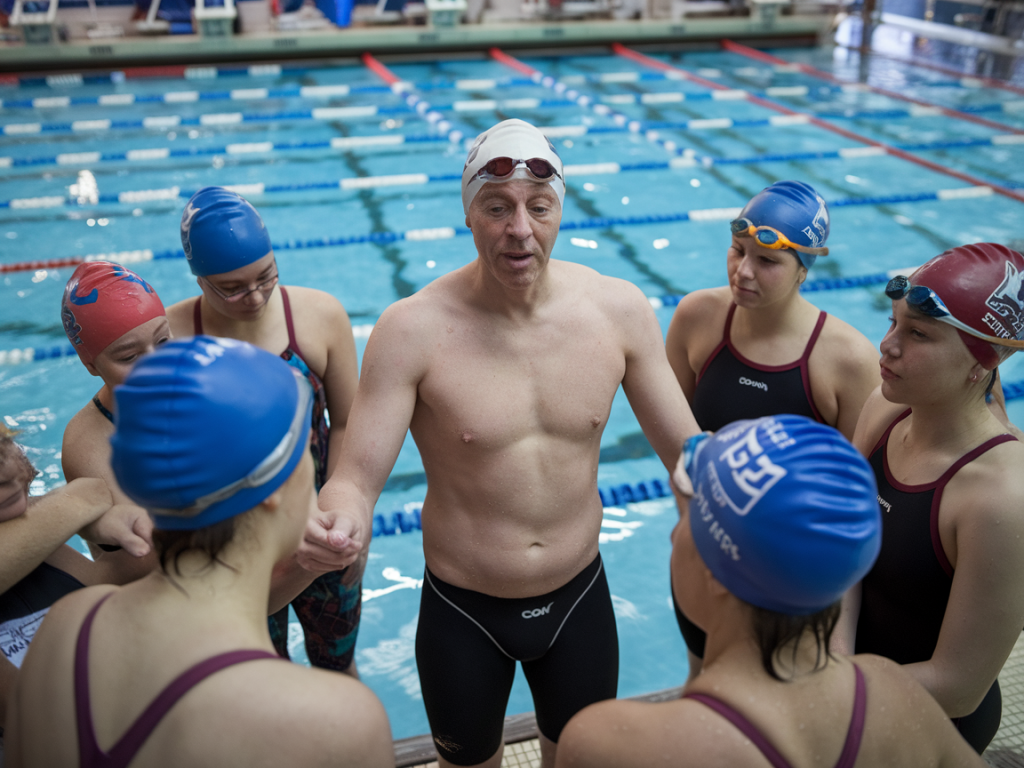
I remember the first masters session I ever coached where the lane looked like a busy roundabout at rush hour: three swimmers clustering at the wall, two trying to sprint, one doing relaxed drills across the middle of the lane, and everyone yelling “clear!” at slightly different times. After that session I made a simple decision — teach three basic lane etiquette rules to every new member on their first week. They’re small, easy to learn, and they transform the lane from chaotic to cooperative. Here are the three rules I insist every masters swimmer knows and can explain to a teammate.
Keep to your side — predictable swimming reduces collisions
One of the quickest ways to create friction in a three-person lane is unpredictability. If everyone claims “I’m left” but switches within a set, overtakes unpredictably, or drifts while focusing on breathing, you’ll have bumps and interrupted sets. I teach a clear guideline:
Odd/even convention: Decide on a side and stick to it for the length of the set. For me, it’s easiest to have the fastest swimmer take the middle when doing pace work, and the other two keep an inside or outside line for continuous swimming. For drill-heavy lanes I make the lane into “left/right” — each swimmer keeps to their side except during controlled overtakes.Line practice: Practice swimming in straight lines — a good drill is the “lane stripe follow”: pick a tile line on the bottom and follow it for 25–50m. This sounds basic, but it instantly improves predictability.I also encourage the use of visual cues: if you wear a bright cap (Arena, Speedo or even a fluorescent silicone cap) put it on the side you plan to keep. It’s a small, practical signal that newer swimmers pick up quickly.
Overtake with a plan — communicate clearly and pass safely
Overtaking is where most lane arguments start. The simple rule I teach is: announce, signal, and pass on the agreed side. Here’s how that works in practice.
Announce: Before attempting an overtake, give a short call — “on your feet!” or “on your left!” — from one or two strokes back. This lets the swimmer being passed prepare to adjust their line or pause at the wall.Signal with your body: As you approach, move into the opposite lane side slightly to indicate you’re about to pass. This is non-verbal and works especially well with quieter pools where vocal calls can be missed.Pass on the agreed side: Establish whether overtakes will happen on the left or right at the start of the session. I prefer overtakes on the side opposite the wall (i.e., in the middle of the lane) so the person being passed can stay closer to the lane rope and avoid being boxed in.When I demonstrate overtakes to new members, I often use a walkthrough: swimmer A slows, swimmer B calls “on your left,” swims a few strokes wider and overtakes, then slots back in without sudden braking. Rehearsing the sequence once or twice reduces hesitation and panic in real sets.
Respect rest & set structure — shared goals, shared space
Masters lanes often contain swimmers of different training goals: endurance, technique, sprints. Respecting rest intervals and set structure keeps everyone on track. My rule is short and sweet: follow the lane plan or ask before deviating.
Agree the set at the start: Spend 30 seconds before the session begins to confirm the main set, intervals, and who needs extra rest. If someone is doing 10x100 at 1:40 and another is building to 8x200, decide whether to split the length of the pool or accept minor interval variations.Communicate changes: If you need extra rest or want to change pace, say it out loud — “I’ll take an extra 15 seconds” — and stick to it. This prevents sudden stops mid-lane that interrupt others’ rhythm.Respect rest spaces: At the wall, don’t block the whole lane. Keep to your side even when resting so swimmers coming in for the next length have a clear line of sight and space.One practical technique I suggest for mixed-ability lanes is the “pace buddy” system: pair a faster swimmer with a steady one for parts of the set. The pace buddy adapts slightly to keep the lane coherent, and both swimmers benefit from a consistent target.
Practical drills and scripts to use with new members
To make these rules stick, I use a few quick drills and scripted phrases during the first sessions.
Drill — Single-file 4x50: Have three swimmers swim 4x50 single-file at an easy pace, swapping the lead each lap. This builds awareness of lane position and overtaking etiquette in a low-pressure situation.Script — “On your [left/right]!”: Teach the exact phrase to use and ask everyone to use it for the first two weeks. Consistency in language avoids misunderstandings.Drill — Wall management: Practice entering and exiting the wall in sequence: fast swimmer exits, middle swimmer turns, rest swimmer waits half a stroke. It’s a small choreography that prevents pile-ups during interval work.Handling tricky situations
Sometimes personalities clash or someone forgets the rules. My approach is calm and practical: correct in the moment, and follow up afterward.
If someone blocks the lane: Politely remind them of the agreed side and the need to move over on the next length. Most issues are forgetfulness rather than malice.If an overtake goes wrong: Stop the set, check everyone’s okay, and run a 25m drill to re-establish the overtaking routine. Use humor and lightness — nobody benefits from a heated argument during training.If a new member is nervous: Offer to swim a few laps at their pace or place them with a supportive swimmer for the first session. A friendly face goes a long way.These three rules — keep your side, overtake with a plan, and respect rest and structure — are straightforward but powerful. Teach them early, practice them often, and you’ll find your lane becomes a little community: efficient, safe, and a lot more enjoyable. If you want a printable one-page etiquette card for your club noticeboard, I’ve made a simple version I can share — just get in touch via the contact page on Bishopsworth Swimming Club.