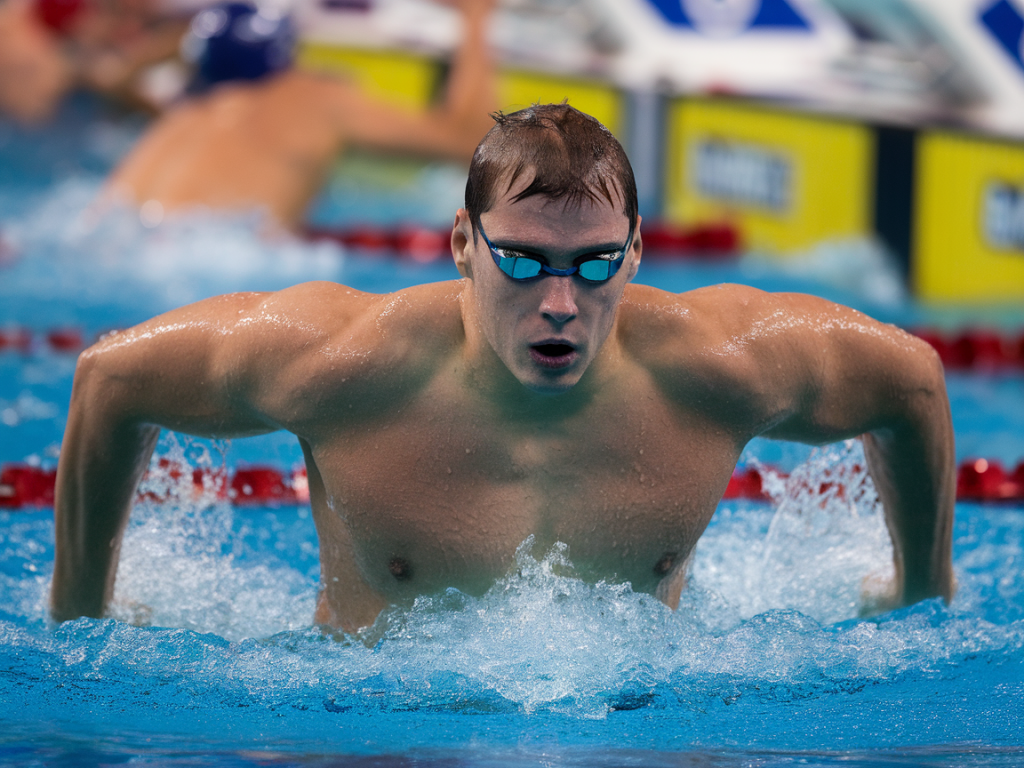
how to shave seconds off your 100m freestyle start with plyometrics and reaction drills

how to shave seconds off your 100m freestyle start with plyometrics and reaction drills

I’ve always believed that races are won and lost in tiny margins — the split-second decisions, the angle of a push, the timing of a breakout. Over the years coaching youth squads and masters swimmers at Bishopsworth, I’ve seen the 100m freestyle start transformed by targeted land work and reaction training. Plyometrics and reaction drills don’t just make you jump higher; they make you move faster from the block and convert that force into forward momentum in the water.

Why plyometrics and reaction drills matter for the 100m free start

The 100m freestyle start is essentially a short power sprint: you need explosive force off the block, quick reaction to the gun, and immediate hydrodynamic entry and breakout. Plyometrics improve the rate of force development — how quickly your muscles produce power — which is more relevant to a start than maximum strength alone. Reaction drills, meanwhile, train your nervous system to translate auditory or visual cues into movement with less delay.

Combined, these elements reduce your reaction time, increase block velocity, and improve takeoff angles. For a typical club swimmer, shaving 0.2–0.5 seconds off a start is realistic after several weeks of focused work — and that can be the difference between a final and a medal.

How I structure a 6-week start-focused plan

I like blocks of 2–3 weeks with increasing intensity and complexity. Here’s the template I use with squads — adaptable for masters and solo swimmers:

  • Weeks 1–2: Technique and foundational plyometrics — low-volume, focus on quality
  • Weeks 3–4: Increased plyo intensity, introduce reactive auditory/visual drills
  • Weeks 5–6: Integrate block-specific drills, full starts under race-like conditions
  • Sessions are short and precise: 20–30 minutes twice a week added to regular swim sessions. You don’t need to replace swim volume — you supplement it.

    Warm-up and safety

    Never start plyometrics cold. I insist on a 10–15 minute general warm-up: light jogging or cycling, dynamic mobility (leg swings, hip circles), and activation exercises (glute bridges, bodyweight squats). Plyometrics impose high ground reaction forces; knees, ankles and hips must be prepared.

    If you have a history of tendon or joint injuries, consult a physiotherapist. Start conservatively with low-impact options such as box step-offs or double-leg bounds, and progress only when technique is flawless.

    Key plyometric exercises I use with swimmers

    Quality over quantity — 3–5 reps per set for high-intensity jumps, 6–10 for lower-intensity ones. Rest fully between sets (60–120s).

  • Countermovement jump (CMJ): Hands on hips or free arms, emphasis on quick dip and explosive vertical jump. Focus on minimal ground contact time.
  • Single-leg bounds: 4–6 bounds per leg along 8–10m. Great for correcting asymmetries and simulating single-leg drive off the block.
  • Drop jumps: Step off a 20–30cm box and aim for immediate vertical rebound. Teaches reactive strength and reduces contact time.
  • Broad jump with quick recovery: Horizontal emphasis mirrors the start’s forward drive. Add a quick sprint of 5–10m after landing to simulate transition into swim.
  • Medicine ball overhead throw: From a quarter squat, drive the ball forward for hip extension power; useful for coordinating upper and lower body explosiveness.
  • Reaction drills that build faster starts

    Reaction drills have to be unpredictable and specific to the stimulus you face on race day. I use both auditory and visual cues:

  • Gun or beep reaction: Use a starting beep app or coach with a whistle. Swimmers stand on the block as they would in competition and react to the sound. Vary the delay between setup and beep to prevent anticipation.
  • Light flashing cue: A strobe or flashlight gives a visual cue — useful if you race with a visual starting system. It also trains the brain to process different stimuli.
  • Partner-release starts: A partner holds a lightweight band connected to the swimmer’s waist and releases unpredictably; the swimmer must react and step into a forward lunge and push-off. Good for coordination and timing.
  • Instant sprint step: From a ready stance, the coach calls “go” and the swimmer performs a single explosive step and push. This isolates reaction and initial drive.
  • Putting it together: example session

    PhaseExerciseSets x RepsNotes
    Warm-upDynamic mobility + activation10–15 minsInclude ankle, hip, and thoracic mobility
    PlyoDrop jumps3 x 5Focus on minimal contact time
    PlyoSingle-leg bounds3 x 4 per legControl landing; forward intent
    ReactiveGun reaction starts (on block)6–8 repsFull recovery between reps
    ReactiveLight cue starts4–6 repsMix with auditory starts
    TransferFull starts into 15m sprint4 x 15mFocus on breakout and underwater phase

    Technical points to watch

    When I coach starts I focus on a handful of high-impact cues rather than overwhelming swimmers with detail:

  • Block stance: Front foot on the edge, back foot ready to drive. Weight distribution should be slightly rear-loaded to allow a powerful push.
  • Arm swing: A coordinated arm drive helps produce torque. Practice timing — the lead arm should pull down as hips extend.
  • Takeoff angle: Aim for a lower trajectory into the water rather than high vertical — roughly 30–45 degrees depending on swimmer size and strength.
  • Quick feet: Measured by push-off time; plyometrics shorten contact and speed up the push.
  • Breakout rhythm: Convert underwater momentum into stroke as early as hydrodynamics permit; avoid too many dolphin kicks if they cost you distance.
  • How I measure progress

    Objective feedback accelerates improvement. I record:

  • Reaction time from the beep to foot movement (smartphone slow-motion works well)
  • Block time — time from beep to water entry
  • 15m split times — measure with lane timers or manual stopwatch
  • Video analysis — side view for takeoff angle and entry, overhead (if possible) for trajectory
  • After four weeks you should see measurable reductions in block time and earlier 15m splits if the work is consistent.

    Common mistakes and how to fix them

    I've seen swimmers do a lot of well-intended but counterproductive things:

  • Overjumping: Trying to launch too high rather than driving forward. Cue: aim for a low, powerful extension.
  • Anticipation: Reacting before the beep because of predictable cues. Fix: randomize the starting cue and include visual distractions in practice.
  • Poor landing mechanics: Hard, knee-dominant landings lead to injuries. Fix: strengthen glutes and teach soft, hip-driven landings.
  • Too much volume: Overdoing plyos causes fatigue. Keep intensity high but volume low.
  • If you’re curious to try this with your squad, I’ve posted printable session plans and video examples on Bishopsworth Swimming Club — see the training resources at bishopsworthswimmingclub.co.uk. Bring a stopwatch, a smartphone for slow-motion, and a coach or partner for safety and feedback. A small investment of time and a few focused sessions can turn your start into a consistent advantage.
    You should also check the following news:

    Training

    build a 12-week in-pool and dryland plan to beat your backstroke plateaus

    02/12/2025

    Hitting a backstroke plateau is one of those small-but-persistent frustrations that I see again and again with swimmers I coach — and with my own...

    Read more...
    build a 12-week in-pool and dryland plan to beat your backstroke plateaus
    Technique

    progressive breathing drills to fix bilateral breathing in freestyle

    02/12/2025

    When I first started coaching swimmers struggling with bilateral breathing, I noticed a pattern: they either tried to force a 3-beat breath or...

    Read more...
    progressive breathing drills to fix bilateral breathing in freestyle