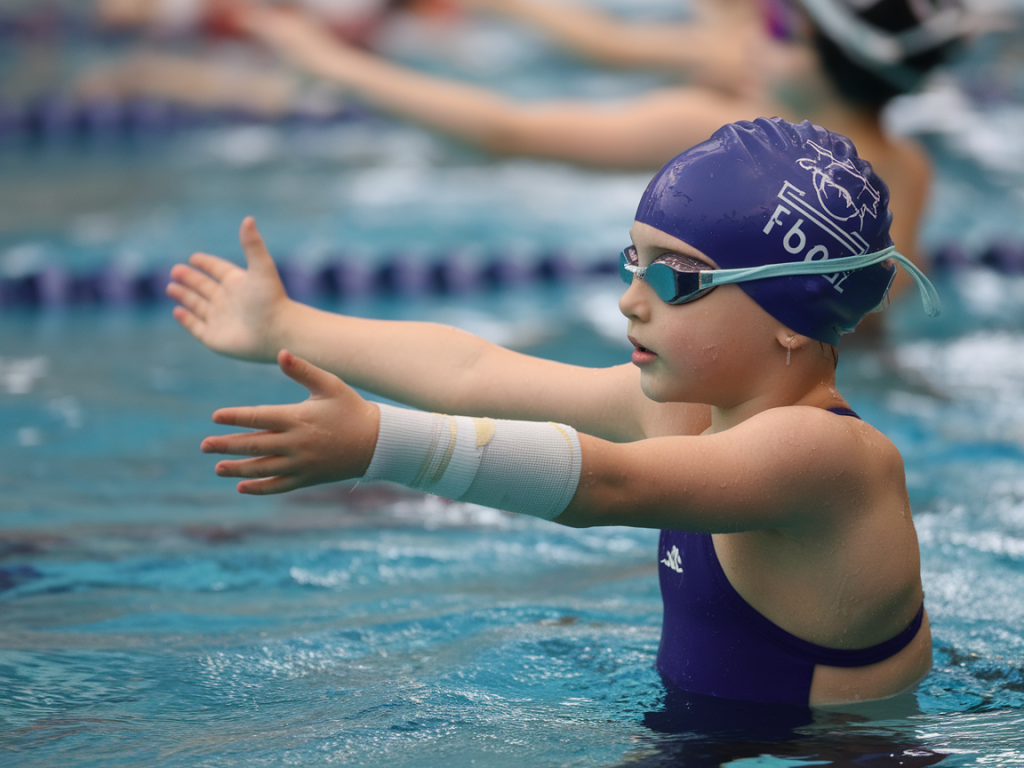
I remember the first time a promising 12-year-old from our junior squad returned after a broken wrist: nervous eyes, a taped splint under a sleeve, and a clear fear of trusting that arm in the water. Getting a young swimmer back safely isn't just about healing bones — it’s about rebuilding confidence, restoring balanced technique, and protecting long-term development. Below is the step-by-step plan I use at Bishopsworth Swimming Club when working with youth athletes coming back from a wrist injury. It blends guidance from physiotherapists, practical pool progressions, dryland work, and communication strategies with parents and teachers.
Initial steps: medical clearance and early communication
Before any pool or gym work begins, the priority is medical clearance. I always ask families to get written sign-off from the child’s GP or treating physiotherapist that the wrist is ready for progressive loading. This isn’t paperwork for paperwork’s sake — it outlines restrictions (e.g., no weight-bearing, no paddles) and gives a timeline for re-evaluation.
Once cleared, I set up a short meeting (or phone call) with the parent, swimmer, and physio to agree on:
Keeping everyone aligned prevents accidental overload and builds trust with the young swimmer.
Phase 1 — Protected mobility and pain control (weeks 0–2 post-clearance)
The first phase focuses on regaining basic mobility and reducing guarding. In the pool, this often means no freestyle pulling with both hands. Instead, I use:
Dryland work in this phase is light and supervised: wrist circles, finger flexion/extension, and gentle forearm stretches as advised by the physio. I frequently recommend Theraband® light resistance for basic opening/closing movements when tolerated.
Phase 2 — Controlled loading and symmetry cues (weeks 2–6)
When the physio is happy and the swimmer has minimal pain, we begin controlled loading. The aims here are restoring symmetric stroke patterns, reducing compensations, and building endurance without irritation.
In-pool progressions I use:
I coach very specific cues: “lead with the elbow,” “soft wrist,” and “feel the water before pulling.” Young swimmers often tighten their wrists if they feel vulnerable, so I remind them to breathe and keep the stroke long and relaxed.
Phase 3 — Progressive strength and technique reintegration (weeks 6–12)
Now we add progressive strength and more complex skill work. The physio usually allows more resistance, so I introduce:
Dryland sessions include eccentric wrist strengthening (controlled lowering motions), forearm pronation/supination with light dumbbells (500g–1kg for younger swimmers), and scapular stability work to reduce load transferred to the wrist during the catch.
Key technical drills I use to restore symmetry
Sample 12-week progression table
| Weeks | Pool Focus | Dryland Focus | Restrictions |
|---|---|---|---|
| 0–2 | Kick focus, uninjured-arm pull, buoy work | Gentle ROM, light Theraband | No resisted pulling or paddles |
| 2–6 | Controlled single-arm catch, scull, rotation drills | Light strengthening, scapular stability | No heavy load, short paddle use not allowed |
| 6–12 | Reintroduce paddles short sets, progressive pull volume | Eccentric wrist work, progressive dumbbells | Monitor pain; increase load gradually |
Return-to-training criteria I require
I won’t move an athlete to full training until:
These are conservative because re-injury at a young age can lead to longer setbacks.
Monitoring, feedback, and modification
Every session after week 2 includes quick monitoring checks: do they have evening pain? Is there swelling? Is stroke timing changing? I log these questions in our session notes and communicate weekly with parents. Video feedback is especially helpful — I often film one 25m every two weeks to compare mechanics. If I see persistent drop of elbow or reduced catch on the injured side, we step back to more drill work.
Psychological and practical tips for youth swimmers
When to reintroduce racing and competitions
I advise skipping competition until the swimmer is training fully (no restrictions for 2–4 weeks) and hitting their technical benchmarks in practice. For a school gala or local meet, consider entering the swimmer in shorter events and avoiding starts or tumble turns if these provoke wrist stress. Always check the physio one last time before a return to competition.
Throughout the rehab I rely on a collaborative approach: physio expertise, coach supervision, parent support, and most importantly, the swimmer’s own feedback. Rebuilding stroke symmetry takes patience, repetition, and targeted drills, but with the right plan we can return young swimmers stronger and more confident than before.